
Holmes County Arrest Records and Court Charges
An arrest record is the account of an arrest itself. It names the person taken into custody, the arresting agency, the date, and the booking that followed. In Holmes County, deputies from the Sheriff's Department and state officers make many of these arrests. That record starts with law enforcement, not the court. A charge record begins later. Once a person is arrested, the District Attorney or a lower court decides the formal charges. Those charges are filed with the court clerk. There they become a public charge record tied to a case number.
The two records are easy to confuse, yet they live in different places. The arrest and booking side stays with the sheriff and the jail. For booking detail and custody status, the county inmate records page covers the roster channels. The court charge record is what the prosecutor actually filed against the defendant. It moves through the case as hearings happen and rulings come down. Court charges after arrest can change, drop, or hold all the way to a verdict. The full case file, with pleas, disposition, and sentence, sits in the criminal court file.
Holmes County arrests begin with the agency listed on the official Holmes County Sheriff page.
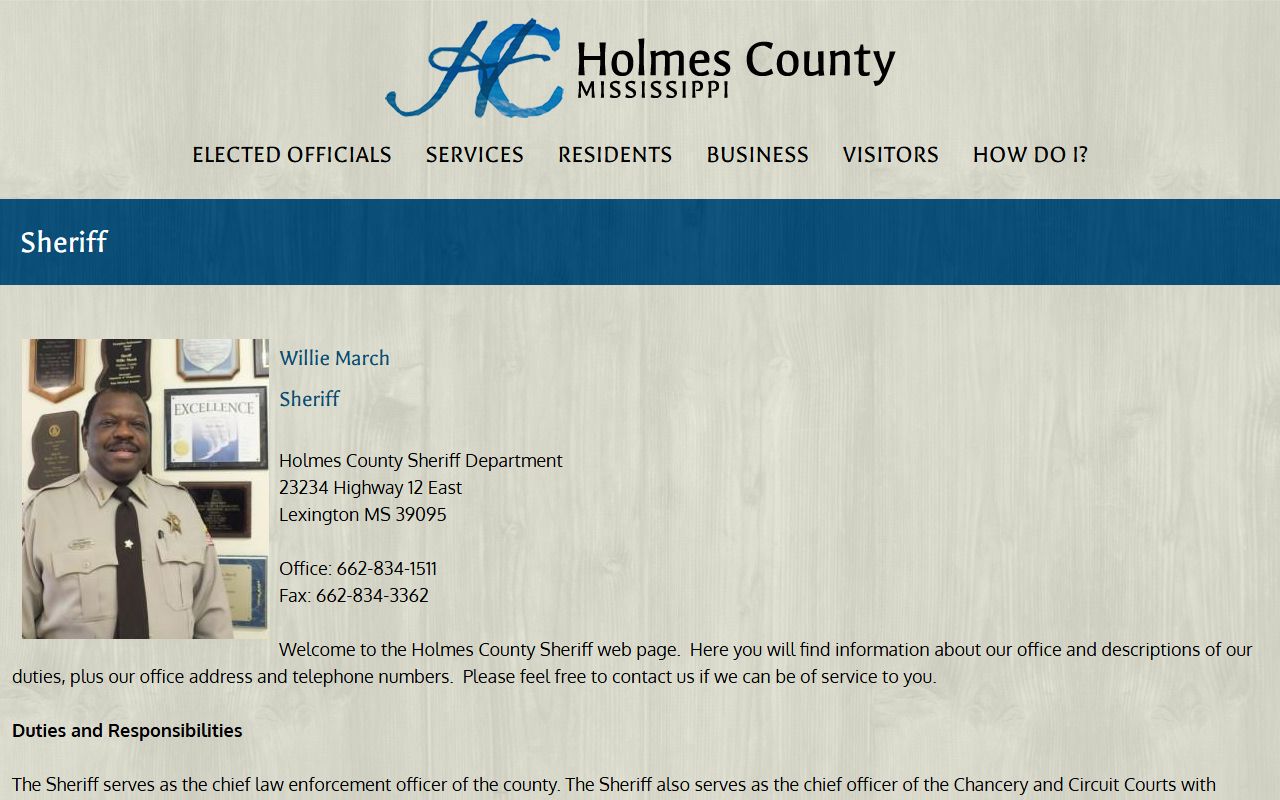
The sheriff books the person and keeps the arrest detail, while the charges that follow are filed and tracked by the court clerk.
What a Holmes County Arrest Record Shows
An arrest record captures the basic facts of a booking. It usually shows the person's name, the arresting agency, the date and time of the arrest, and the alleged offense that prompted it. In Holmes County, the Sheriff's Department holds this booking detail. The record may also note a booking number and the facility used. None of this is a finding of guilt. An arrest only means an officer had reason to take the person into custody.
The county does not publish an online jail roster, so the arrest side is reached by phone or by a written request to the sheriff. From there, the booking record and the court charge record travel on separate tracks. The sheriff keeps the arrest and custody data, and the court clerk opens the charge file once a charging document is filed. Reading both gives the fuller picture of what happened after an arrest.
How to Find Holmes County Arrest Records and Charges
Charges show up in the court case index, not in a booking blotter. For felony charges, the case sits in Circuit Court. For misdemeanors, county ordinance violations, and initial appearances, the case starts in Justice Court. Mississippi Electronic Courts, known as MEC or PAMEC, hosts online dockets for circuit and chancery cases where an account is available. When the file is sealed or a certified copy is needed, the clerk counter is the better route.
- Identify the court that handles the charge. Felonies go to Circuit Court, while misdemeanors and initial appearances begin in Justice Court.
- For circuit cases, log in to Mississippi Electronic Courts where an account is available, or visit the Circuit Clerk counter.
- Search by the defendant's name or by case number, then open the matching case.
- Read the charge list, and check each charge for its statute code, severity level, and current status.
Older or non-digitized files may not appear online at all. In that case, call or write the clerk who owns the file. The Holmes County Circuit Clerk can be reached at 662-834-2476 for circuit criminal files, indictments, and motions. Statewide criminal history rolls up through other systems covered further down.
How Charges Get Filed After an Arrest
The charge record begins when a charging document is filed. There are three main kinds, and the one used depends on the level of the offense. A misdemeanor often starts with a sworn affidavit or complaint in Justice Court or a municipal court. Many felonies are charged by information, which the prosecutor files directly. Serious felonies usually require an indictment, which a grand jury returns in Circuit Court. Each document does the same basic job. It states the charge and opens the case.
Justice Court also handles the first court step after many arrests. The county notes that its judges hold sessions at the jail three times each week. That schedule helps give an arrested person an initial appearance within three days of arrest. The affidavit that an officer swears out is often what puts that first charge on the record.
| Complaint or Affidavit | Information | Indictment | |
|---|---|---|---|
| Filed By | Officer or prosecutor | Prosecutor | Grand jury |
| Typical Level | Misdemeanors | Some felonies | Serious felonies |
| Court | Justice or Municipal | Circuit | Circuit |
| Begins | The case | The case | The case |
Who Files Charges in Holmes County
In Holmes County, felony charging decisions rest with the District Attorney. Akillie Malone-Oliver serves as District Attorney for the 21st Circuit District, which covers Holmes, Humphreys, and Yazoo counties. The office can be reached at 662-653-3191. The prosecutor reviews felony and serious criminal matters. The same office presents cases to the grand jury, pursues indictments and informations, and handles pleas, dismissals, and nolle prosequi decisions.
Lower charges follow a different path. An officer or a citizen can swear an affidavit in Justice Court to start a misdemeanor case. A grand jury, not the prosecutor alone, returns a felony indictment in Circuit Court. So a single arrest can lead to charges filed by more than one office, depending on how serious the alleged offense is.
Charge Status in Holmes County Court Records
A charge is not fixed once it is filed. As a case moves, charges can be amended, reduced, added, dropped, or dismissed. The status field on the record shows where each charge stands at the moment. A pending charge is still open. A dismissed charge has been ended by the court. Reading the status correctly matters, because an old listing may not reflect the final result.
| Status | What It Means |
|---|---|
| Pending | The charge is open and the case is still moving. |
| Amended or Reduced | The charge was changed, often to a lesser offense. |
| Dismissed | The court ended the charge, and it is no longer being pursued. |
| Nolle Prosequi | The prosecutor chose not to move forward on the charge. |
Holmes County Charge Codes and Levels
Every charge ties back to a statute. The code on the record points to the exact Mississippi law the charge falls under. Severity sets the track the case takes. Felonies carry the most serious penalties and route to Circuit Court. Misdemeanors are lesser offenses handled in Justice or municipal court. One arrest can produce several separate charges at once, and they do not all have to share the same level.
The severity level also shapes the charging document. A felony usually needs an indictment or an information, while a misdemeanor can rest on an affidavit. The code and level together tell a reader how the system is likely to treat the case and where the file will be kept.
Charges vs. Convictions
Being charged is not the same as being found guilty. A charge is an accusation that the case still has to prove. A conviction comes only after a guilty plea or a verdict. Many charges never become convictions, because they are dropped, dismissed, or reduced along the way. The conviction or other outcome is recorded in the Holmes County criminal court records.
| Charge | Conviction | |
|---|---|---|
| Stage | Accusation | Guilty plea or verdict |
| Burden of Proof | Probable cause | Beyond a reasonable doubt |
| Public Record | Yes | Yes |
| Meaning | Case must still be proven | Guilt has been established |
Statewide Charge and Criminal History Lookups
Local charges feed into a few statewide systems. Convictions, not arrests, drive what shows up on the public registry. Mississippi posts convicted offenders on the Mississippi Sex Offender Registry, which is built on convictions for registrable offenses.
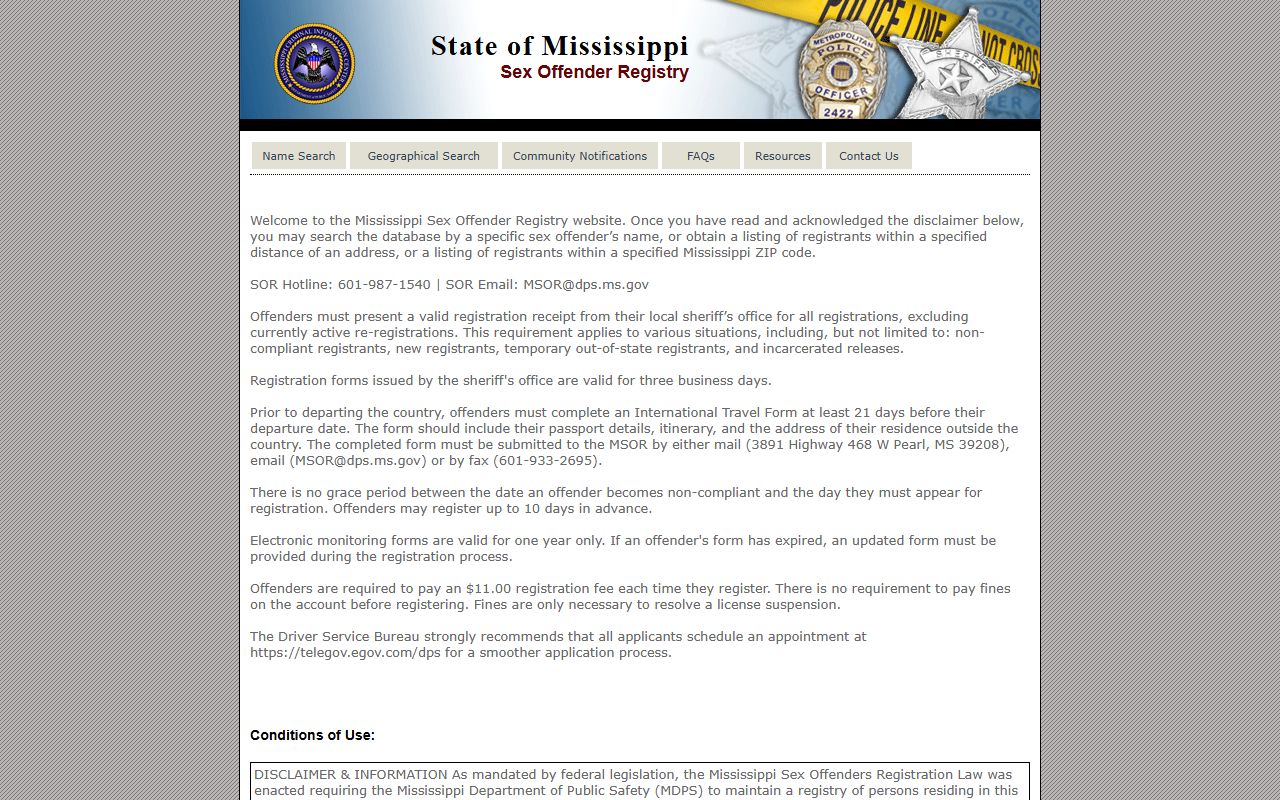
Because the registry lists only people convicted of those offenses, a charge or an arrest alone never appears there.
Sentenced state inmates appear in a different tool. The MDOC inmate search lets the public look up people in state custody by name or by MDOC identification number. County arrest and charge questions, though, still route back to the local sheriff and the court clerk.
Expunging Holmes County Charge Records
Mississippi law lets people clear some records from public view. Under Section 99-19-71, eligible dismissed, dropped, acquitted, and no-disposition charges may be expunged by petition. The law also reaches certain first-offender misdemeanors and some felony convictions after a waiting period. A dropped or dismissed charge does not vanish on its own. The person has to ask the court to remove it.
An expunction starts in the court tied to the arrest or charge. For a Justice Court misdemeanor or a dismissed lower-court charge, begin with that court. For a felony or a Circuit Court matter, begin with the Circuit Clerk. The petitioner files a written request that identifies the arrest, the charge, the disposition, and the date. The District Attorney may receive notice and may object. If the judge grants the petition, the order goes to the clerk, the arresting agency, the jail, and state repositories so public access can be removed.
Restricted Arrest and Charge Records in Holmes County
Not every arrest or charge record is open. Youth Court matters are confidential under Section 43-21-251, so charges against a minor usually stay sealed. Sealed adult records, active investigations, and expunged charges are also withheld. Public copies leave out Social Security numbers, financial account numbers, and other protected identifiers.
The Mississippi Public Records Act gives the public a right to inspect many government records. It does not override juvenile confidentiality, sealing, or an expunction order. To request an open charge record, write the clerk or the sheriff and include the name, the date of birth if known, and any case number.
Note: Charge status can change quickly, so confirm any arrest or charge record with the clerk or the court before relying on it.